
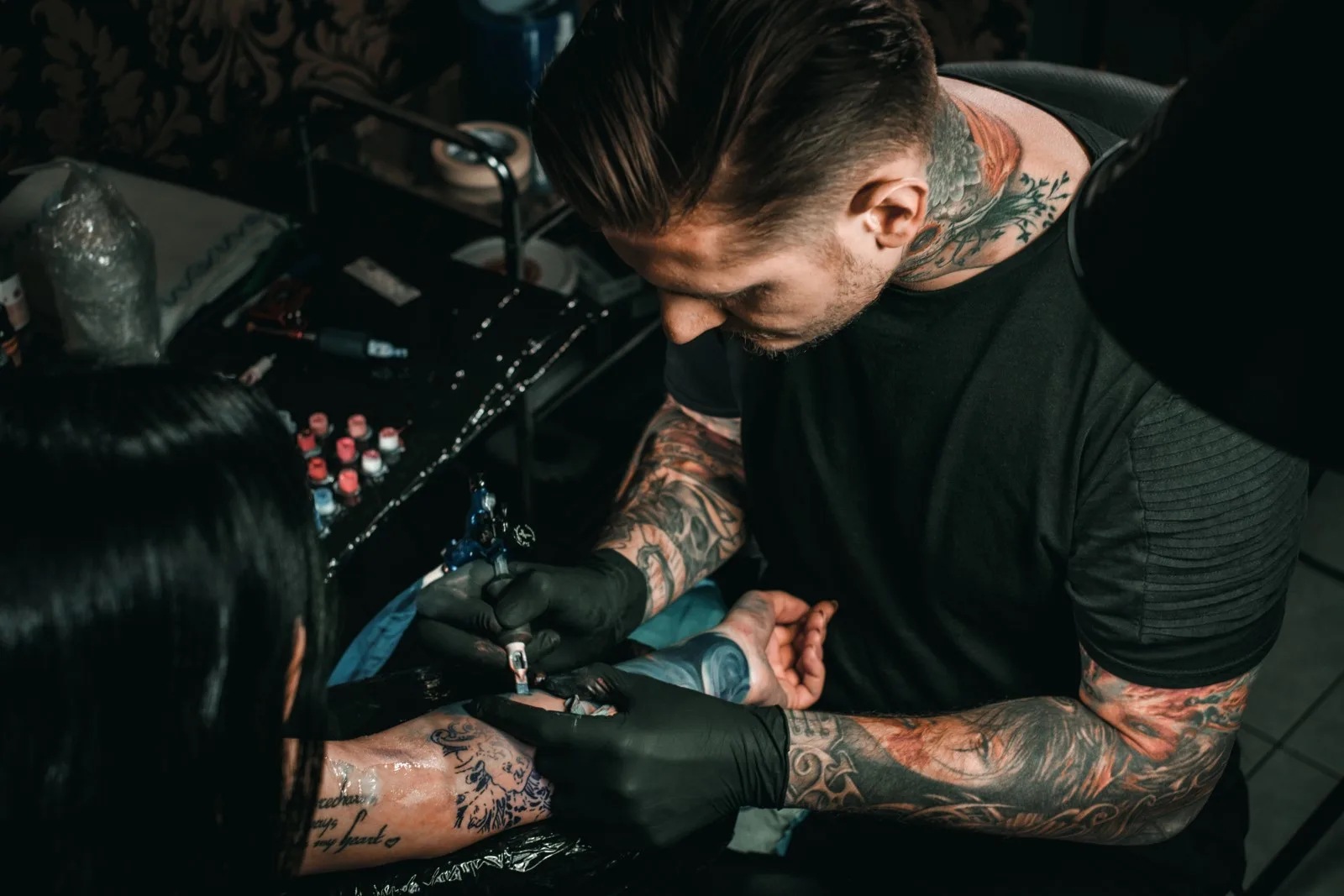

A matter of reputation for the tattoo studio
The tattooing profession is not regulated by law, at least not in Spain. There is no set training or degree program. Most tattoo artists learn their craft from their peers. They see themselves as artists who learn from experienced professionals through observation and close collaboration. So there is no need to ask for diplomas, master’s certificates, academic degrees, or formal vocational training. Not even a high school diploma is required. However, many tattoo studios now offer training courses that last over weekends or even longer periods. Therefore, you can obtain attendance confirmations and certificates of completion for these courses.
Who knows what?
Certificates of attendance aren’t enough to truly judge a tattoo artist or a tattoo studio. You can get a better idea by asking your friends and acquaintances. There are surely people who’d be happy to share their experiences with their tattoo artist. A good tattoo studio’s reputation precedes it. It’s well-known among the tattooed community, featured in relevant magazines, and represented at conventions and exhibitions. Good work, done with precision and aesthetic flair, gets around!
No more trips to the tattoo parlor
Once you’ve caught the bug and found a tattoo parlor you trust, go check it out. There’s usually a waiting area with magazines on display. This will give you a first impression: How do they greet you? Do they welcome you as a potential customer? Or do they just leave you in a corner with a pile of catalogs? What’s the atmosphere like? Do they ask about your wishes, your concerns, your reasons for getting a tattoo? And what does the studio look like?
In many cases, the walls are adorned not only with certificates from past courses and training programs, but also with photos of the best work. Do you like the style of the tattoos? Some studios specialize in a particular style, while others see themselves more as a kind of intermediary between freelance tattoo artists and their clients.

References, exhibitions, social media
References include everything a tattoo studio has to show for itself. The range extends from thank-you notes from clients—some more prominent than others—to awards the studio has won for artistic achievements or other accomplishments. Note: Online customer reviews aren’t enough! This is because it’s not always easy to tell what’s fake from what’s genuine. This applies to both Google reviews and testimonials that studios may include on their own websites.
Attend tattoo conventions
As mentioned earlier, tattoo conventions, such as Tattoocon, are a kind of trade show or expo for tattoo artists, tattoo parlors, their clients, and all interested parties. In addition to smaller local events, there are also large international trade shows and conventions that attract five-figure attendance. For tattoo studios, these events serve, on the one hand, as a promotional platform and, on the other, as a place to find inspiration and network within the industry. No tattoo studio can be represented at every tattoo convention, but regular participation in at least some events is always a good sign.
Art is meant to be exhibited
About twenty years ago, it was common for tattoo studios to photograph their best work and display it in their shop windows. That’s still the case today. But that’s not enough. These days, artists also compete with each other online. That’s why both individual tattoo artists and studios maintain their own social media channels. It doesn’t have to be a live session on YouTube: an aesthetically designed Instagram feed also speaks volumes. Just ask—the studio will surely give you a card listing all their social media channels.
Get a tattoo in 3 steps

You’ll receive a personalized tattoo consultation. Contact us via email or Super Chat (icon in the bottom right corner).

Book your appointment.

Your dream tattoo will come true in a relaxed atmosphere.

Make sure the tattoo parlor is clean!
If you’re already at the studio, take a closer look. Maybe you can ask someone to show you the rooms where the tattoos are done. But the reception area will also give you an idea of the atmosphere. Because it’s not certain they’ll let you in. Many studios still have an old-school vibe. Photos of tattoos hang on the walls, you can just walk right in, and rock music or heavier sounds echo through the rooms. There’s likely a coffee machine gurgling and hissing somewhere, and there are probably other tattooed people around. That invites you to come in.
Modern and clean studios
Another type of tattoo parlor that has emerged recently, however, is absolutely sleek and clean. You can’t even walk in without an appointment. The studios are furnished in a minimalist style, have an almost impersonal feel, and you can forget about rock music and the smell of coffee. But that doesn’t have to be a bad thing. Because what really matters is how clean the studio is. Music has little to do with it. A tattoo studio you can’t just walk into has less foot traffic and is therefore easier to keep clean. The downside is that you can’t find out without making an appointment.
The most important points
Ideally, treatment rooms should be separate from the entrance area. If you’re lucky enough to see a room like this, keep the following in mind:
- Tattoo artists use disposable gloves when working.
- The needles must be in sterile containers and may only be left in those containers.
- The lounge chairs should be disinfected regularly.
- The machines and devices are hygienically packaged in plastic.
- Animals and visitors are not allowed in the treatment rooms, at least while treatment is in progress.
- Ideally (thanks to the coronavirus), you should wear a mask while working.
Whether to have only one person in the room at a time or to group several treatment chairs or couches together in a room is a matter of personal preference and has nothing to do with hygiene.

Professional services: counseling, education, follow-up care
Tattoo artists are artists. But getting a tattoo isn’t enough. Before you schedule an appointment to get a tattoo, get to know the artist. Let them show you their work and explain everything in detail. A detailed conversation about the design you want should come naturally. During the consultation, you will also be informed of the possible risks. You will be told how to care for the tattoo before and after the procedure, and what to keep in mind regarding sleep, alcohol consumption, exercise, and visits to swimming pools.
Seek dialogue!
A reputable tattoo artist will also explain everything you need to know about aftercare. Taking care of your tattoo is just as important as the pain involved in getting one. Professional tattoo artists aren’t impatient; instead, they’re happy to answer your questions in detail. Or they might even explain everything to you before you even ask.
Don’t be shy about asking questions. A tattoo artist’s daily work isn’t just about getting tattoos. There are other activities that make up a much larger part of the job. Cleaning and disinfecting tools and equipment is just as important as constantly sketching and refining designs in collaboration with clients. And conversations are important, too. Because every tattoo is a wound. Ink is injected under the skin with needles, which requires skill, experience, and concentration. It also requires concentration on your part, because you have to endure the pain and stay still. This isn’t possible without trust. And trust is built through the conversations that come before.
Minimize risks through proper aftercare
The skin is pierced at the tattoo site. The needle is used to deposit ink under the skin. That’s why a tattoo may bleed. If the tattoo parlor maintains proper hygiene, your skin will be disinfected and no infection will occur. However, the skin in this area will remain irritated for a while and may also become swollen. Color pigments are foreign substances that the body wants to get rid of, at least in part. Therefore, it is normal for the tattoo to bleed during the healing process, which means that color will also be visible on any bandages applied. Your tattoo artist will explain all of this to you. If you have any doubts or questions, contact your tattoo artist.
Aftercare for tattoos involves promoting wound healing. You must keep the wound clean and ensure that the regrowing skin remains supple so that the tissue does not scar. This is because scars can make the tattoo look unattractive. A reputable tattoo studio will check the tattoo after a few days and again after a few weeks. Sometimes, the pigments under the skin shift during the healing process. In this case, the tattoo can be touched up. This is included in the cost of the tattoo and should not be done at the customer’s request.

Conclusion: Careful preparation is everything!
A tattoo is a decision that will last a lifetime. Take your time; don’t rush into it. And above all, don’t focus solely on the price. Make sure the studio takes good care of you and provides comprehensive service. References, a business license, and other formalities will help you evaluate the studio.