
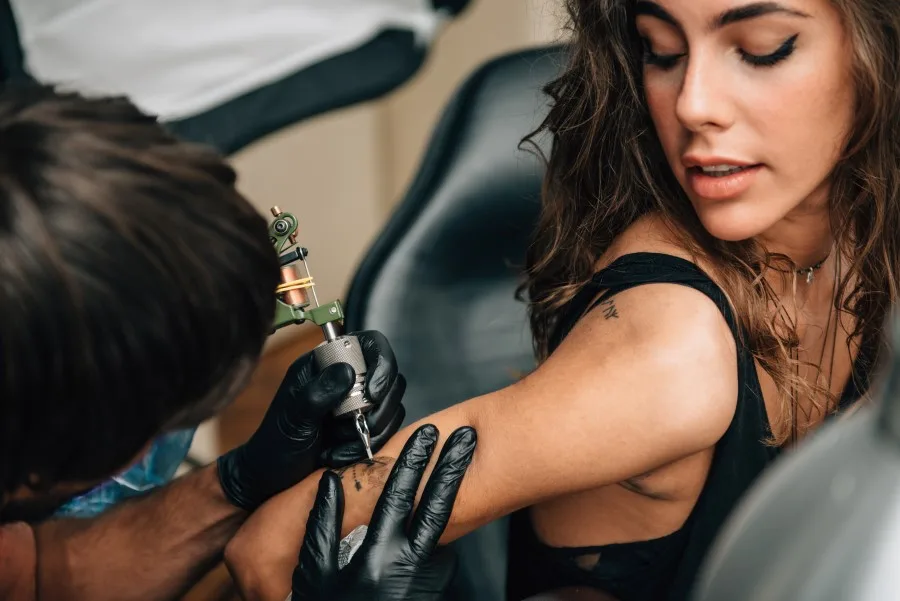
A tattoo is, first and foremost, a serious injury to the skin. Countless needle pricks pierce several layers of skin, and then pigments are introduced as foreign bodies into areas where the body cannot break them down. As with any wound, proper care is essential to ensure that the tattoo heals quickly and properly. But proper tattoo care can do even more. It ensures that your tattoo retains its color and remains clearly visible even after many years.
Tattoos often fade and become discolored. But with proper care, you can slow down this natural process.

Special care for tattooed skin: a great idea!
Tattoos age just like your skin—and along with it. You can slow down the aging process of your skin with various skincare products specially tailored to your skin’s needs. If there are pigments under your skin, your skincare routine needs to be a little different. Because pigments need care, too. That’s why taking care of your tattoos is always a good idea.
But when we talk about tattoo care, we don’t just mean caring for the skin immediately after the tattoo is applied, but also long-term care once the healing phase is complete. This can slow down the aging of the tattoo—that is, its fading and blurring. Today, skin researchers have developed numerous care products that protect tattooed skin and keep your tattoo looking beautiful for a long time.
Get a tattoo in 3 steps

You’ll receive a personalized tattoo consultation. Contact us via email or Super Chat (icon in the bottom right corner).

Book your appointment.

Your dream tattoo will come true in a relaxed atmosphere.

Proper Tattoo Care
Tattoo care changes over time. The care you need to take of a tattoo right after getting it is different from what you need to do once it has healed. Here’s the ideal way to care for a tattoo:
1. Immediately after the injection:
- Apply a breathable adhesive bandage.
- First wash your hands and clean the tattoo with mild soap before applying the bandage.
- Ideally, a tattoo artist should do it, but you can also do it at home.
2. Six to eight hours after the puncture:
- Ideally, the cast should simply remain in place.
- If too much fluid has accumulated under the bandage, change it.
- Wash your hands thoroughly first, rinse the tattoo with mild soap, and gently rub it with a lint-free cloth. Let it air dry briefly before applying the new bandage.
3. From the first to the fourth day after the puncture:
- The adhesive tape is left on for as long as possible.
- The adhesive bandage should only be changed if too much fluid has accumulated beneath it.
- When you change the bandage, wash the tattoo with warm water and a pH-neutral soap.
- After washing, pat the tattoo dry with a clean, lint-free towel. Do not rub under any circumstances. The bandage should only be applied once the tattoo is dry.
4. Starting on the fourth day after the egg retrieval:
- Remove the bandage completely; your skin can now heal on its own without it. Exception: friction from clothing. You should avoid this as much as possible.
- Keep avoiding sports and swimming.
- Wear only loose-fitting clothing over the tattoo.
- Keep your tattoo clean.
- Depending on your skin type, apply a thin layer of special cream at least once in the morning and once at night, but possibly up to six times a day. Ideally, use a skin care cream that helps the skin heal after injuries (for example, SKIN STORIES fast-repair balms).
- Wash your hands before applying the cream to avoid introducing any pathogens.
5. Starting from the third week after the egg retrieval:
- Take care of your skin and your tattoo every day by using a moisturizing lotion and, if possible, one with an SPF of 6 or higher.
- Dry, rough skin requires special care, such as the SKIN STORIES Defining Serum.
6. Before sunbathing:
- Every time the sun's rays hit your tattoo, you're protecting it from UV radiation.
- To do this, it’s best to use a special cream for tattooed skin with SPF 50+. This is because intense sunlight will cause your tattoo to fade.

Things to Avoid When Caring for Tattoos
There are some things your tattoo can't handle. Some of them are related to the healing process, while others should be avoided permanently. Keep this in mind:
- Until the tattoo has fully healed (at least six weeks), long showers, baths, and swimming pools are strictly off-limits.
- Don't touch it. Until the tattoo has healed, keep your hands off it. This is especially true when it comes to scratching. The healing process can cause itching. But don't touch it! Otherwise, you'll end up with scars.
- Drink enough water. You need plenty of water and a vitamin-rich diet to help your skin heal.
- Don't expose yourself to the sun. UV radiation is very harmful to pigments. You already know this: garden furniture and summer clothes fade very quickly. Your tattoo will also fade if you forget to protect yourself from the sun.
What about regular skincare? Yes and no. Of course, a “regular” body lotion is always good for the skin as a moisturizer. It’s also better than not using any moisturizer on tattooed skin. But tattooed skin needs more. Tattoo care products always contain additives that protect the pigments, as well as UV filters to prevent fading. Specialized tattoo care products are somewhat more expensive than “regular” skincare products. But they save you the cost of getting a new tattoo. By the way, you don’t need 20 different care products: If in doubt, tattoo care products can also be used on skin without pigments. After all, the products contain everything that’s good for the skin.
By the way, tattoo care also depends on the part of the body: The hands and feet, for example, are particularly vulnerable to frequent washing and friction (from clothing), as well as frequent exposure to light. These areas of the body should be moisturized more often to prevent your tattoos from fading. However, the size of your tattoo does not affect the frequency or type of care required.
Note: Red ink fades the fastest. We recommend intensive skin care with high UV protection for red tattoos.

Special case of dry skin
Hot air, cold, extreme heat, and wind—as well as friction from clothing—can cause dry skin. This skin needs extra moisture. Tattoos lose their color intensity on dry skin and appear faded. Be sure to moisturize dry areas of your skin every day. Special care for tattoos on dry skin is particularly beneficial.
By the way, many people also tend to develop dry skin and, in some cases, neurodermatitis when they're stressed. Do something good for yourself and your tattoo, and try to avoid stress as much as possible.
Tattoo Care in the Summer
UV radiation is particularly high in the summer due to the abundance of sunlight. However, UV radiation breaks down the pigments in your tattoos, causing them to fade quickly. Be sure to use a tattoo-safe sunscreen to prevent premature fading and discoloration.
Special Cases: Tattoo Care for Specific Skin Types and Skin Conditions
There are many specialized skincare products designed for every skin type, so it’s natural to wonder how this applies to tattoos. Tattooed skin is a unique type of skin in its own right, so the distinctions within tattooed skin are no longer relevant. Therefore, skincare products for tattooed skin are generally suitable for any skin type.
Ideally, choose a tattoo care product that does not contain microplastics, mineral oils, or parabens. If you have very dry skin, use the tattoo care product more frequently. And what applies to daily care also applies, of course, to sun protection.
However, if you have a skin condition, you should also follow your doctor’s advice and use medication to care for your tattooed skin. Because only healthy skin will allow your tattoo to look its best. Therefore, always apply the prescribed skin care medication first. Once it has been absorbed, you can also apply the tattoo aftercare product after ten or twenty minutes (provided your doctor has no objections).