
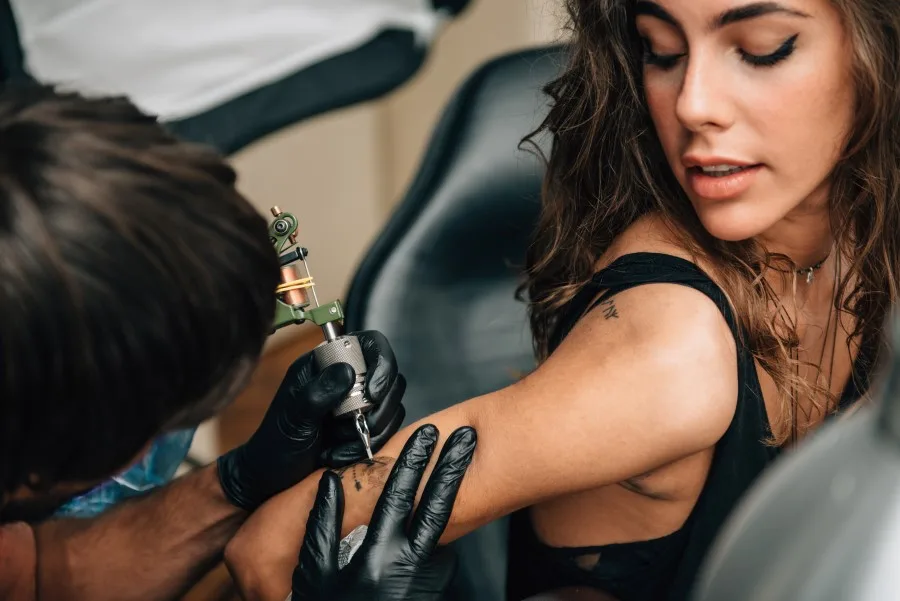
A tattoo is, first and foremost, a serious injury to the skin. Countless needle pricks pierce through several layers of skin, and pigments are then injected as foreign substances into areas where the body cannot break them down. As with any wound, proper care is essential to ensure that the tattoo heals quickly and looks its best. Moreover, proper care can do even more. It ensures that your tattoo remains vividly colored and clearly visible even after many years.
Fading and smudging are normal with tattoos. However, with the right care, you can manage this natural process.

Special care for tattooed skin – a good idea!
Tattoos age just like your skin and along with your skin. You can slow down the aging process of your skin by using various skincare products specifically designed to meet your skin’s needs. If there are pigments under the skin, your skincare routine needs to be a little different, since those pigments also require special care. That’s why tattoo care is always a good idea.
However, when we talk about tattoo care, we don’t just mean looking after the injured skin immediately after the tattoo has been done, but also long-term care once the healing phase is complete. This can slow down tattoo aging—that is, the fading and blurring of the tattoo. Skin researchers have now developed numerous care products that protect tattooed skin and keep your tattoo looking beautiful for a long time.
Your tattoo in 3 steps

During your first consultation, you will receive personalized information about your tattoo. Contact us via email or SuperChat (icon in the bottom right corner).

Make an appointment.

Your dream tattoo will be created in a relaxed atmosphere.

Proper tattoo care
Tattoo care changes over time. You take care of your tattoo differently right after getting it and after it has healed. Here’s what proper tattoo care involves:
1. Immediately after pricking:
- Apply a breathable bandage.
- Wash your hands first, then wash the tattoo with mild soap before applying the patch.
- Ideally, the tattoo artist will do this, but you can also do it at home.
2. Between six and eight hours after pricking:
- Ideally, the bandage just stays on.
- If too much wound fluid has accumulated underneath, change the bandage.
- Wash your hands thoroughly beforehand, rinse the tattoo with mild soap, and pat it dry with a lint-free cloth. Let it air dry briefly before applying the new patch.
3. Between the first and fourth day after lancing:
- The cast stays on for as long as possible.
- The dressing is changed only if too much wound fluid has accumulated underneath.
- When changing the patch, wash the tattoo with lukewarm water and pH-neutral soap.
- After washing, gently pat the tattoo dry with a clean, lint-free towel. Do not rub under any circumstances! The patch should only be applied once the tattoo is dry.
4. Starting on the fourth day after lancing:
- Remove the bandage completely; your skin can now heal on its own. Exception: clothing that rubs against the skin. You should avoid this as much as possible.
- Keep avoiding sports and swimming.
- Wear only loose-fitting clothing over the tattoo.
- Keep your tattoo clean.
- Depending on your skin type, apply a thin layer of special cream at least once in the morning and once in the evening, but possibly up to six times a day. A skin care cream that helps the skin heal after injuries is ideal (e.g., SKIN STORIES Rapid Repair Balms).
- Wash your hands before applying the cream so that you don't introduce any pathogens.
5. Starting from the third week after lancing:
- Take care of your skin and your tattoo every day with a daily moisturizer that hydrates and ideally has an SPF of 6 or higher.
- Dry and rough skin requires special care, such as SKIN STORIES Defining Serum.
6. Before sunbathing:
- Whenever the sun’s rays hit your tattoo, protect it from UV radiation.
- A special cream for tattooed skin with SPF 50+ is best suited for this. This is because intense sunlight will cause your tattoo to fade.

Things to Avoid in Tattoo Care
There are a few things your tattoo cannot tolerate. Some of them affect the healing process, while others should be avoided permanently. Please note:
- Until your tattoo has fully healed (at least six weeks), long showers, baths, and swimming pools are strictly prohibited.
- Don't touch it! Until your tattoo has healed, keep your hands off it. This is especially true when it comes to scratching. Healing often goes hand in hand with itching. Nevertheless, keep your hands off! Otherwise, scars will form.
- Drink plenty of fluids. You need plenty of water and a vitamin-rich diet to help your skin heal.
- Stay out of the sun! UV radiation is very harmful to pigments. You know how it goes: garden furniture and summer clothes fade very quickly. Your tattoo will also fade if you forget to use sunscreen!
What about regular skincare—is that off-limits too? Yes and no. A “regular” body lotion is, of course, always good for the skin as a moisturizer. It’s also better for tattooed skin than no skincare at all. But tattooed skin needs more. Tattoo care products always contain additives that protect pigments, as well as UV filters to prevent fading. Special tattoo care products are somewhat more expensive than “normal” skin care products, but they save you the cost of getting a tattoo redone. By the way, you don’t need 20 different care products. If in doubt, tattoo care products can also be used on skin without tattoos. After all, these products contain everything that’s good for the skin.
How you care for your tattoo also depends on where it is located on your body. For example, your hands and feet are particularly vulnerable to frequent washing and friction (from clothing), as well as frequent exposure to light. You should apply moisturizer to these areas more often to prevent your tattoos from fading. On the other hand, the size of your tattoo does not affect how often or how you should care for it.
Please note that red tones fade the fastest. Intensive skincare with high UV protection is recommended for red tattoos.

A specific type of dry skin
Heating, cold, extreme heat, and wind, as well as friction from clothing, can cause dry skin. This type of skin needs extra moisture. Tattoos lose their color intensity on dry skin and appear pale. Be sure to apply cream to dry areas of skin every day. Special tattoo care products for dry skin are particularly effective.
Many people tend to develop dry skin and even eczema when they're stressed. Do something good for yourself and your tattoo, and try to avoid stress as much as possible.
Tattoo Care in Summer
UV radiation is particularly high in the summer due to the intense sunlight. However, UV radiation breaks down color pigments, causing your tattoos to fade quickly. Be sure to use tattoo sunscreen to prevent premature fading and smudging.
Special cases: tattoo care for specific skin types and skin conditions
There are plenty of specialized skincare products for every skin type, so it’s natural to wonder how this applies to tattoos. Tattooed skin is a distinct category in itself, so the nuances specific to different skin types no longer apply. Skincare products for tattooed skin are therefore generally suitable for all skin types.
Ideally, you should choose a tattoo care product that is free of microplastics, mineral oils, and parabens. If you have very dry skin, simply apply the tattoo care product more often. Of course, the same principles that apply to daily care also apply to sun protection.
However, if you have a skin condition, you should also follow your doctor’s advice and use medication when caring for your tattooed skin, since only healthy skin will show off your tattoo to its best advantage. Therefore, always apply the prescribed medical skin care first. Once it has been absorbed, you can also apply the tattoo care product after ten to twenty minutes (provided your doctor has no objections).