

Some parts of the body are more sensitive than others, and there are some places where you really don’t want to get a tattoo—that’s understandable. But which spot is actually the best for a tattoo? It depends. In addition to your pain tolerance, the design you choose, your job, and other factors also play a role.
Body Locations – Tattoos: Ideally, this is a perfect match. Your tattoo should suit the body location; the design and colors must harmonize with your skin and body shape in that area. And, of course, it’s also important that it fits your lifestyle and circumstances. If your job involves a lot of customer contact, you might not want a tattoo in a highly visible spot, such as on your face or hands. Ask for advice once you’ve found the tattoo artist who meets your needs! The artists have a lot of experience themselves and can help you decide on body placement and tattoo design.
Table of Contents
lower lip
It sounds unpleasant, and it is, but it’s less painful than other areas: The inside of the lower lip is a good spot for a tattoo because the skin there is soft and constantly moist. However, the mucous membranes are extremely well-supplied with blood, which is why these tattoos fade very quickly. On the other hand, you don’t need to worry about tattoo aftercare—it’s not necessary here.

Neck
The skin on the neck is thin and rich in nerve endings. That’s why a neck tattoo is quite painful. The position you have to maintain during the tattooing process is also rather uncomfortable. Since the neck is exposed to a lot of sunlight, a tattoo in this area will fade quickly. However, with proper care, you can at least slow down the fading process a bit.
Get your tattoo in 3 steps

You’ll receive a personalized tattoo consultation. Contact us via email or Superchat (click the icon in the bottom right corner).

Book your appointment.

In a relaxed atmosphere, we'll make your dream tattoo a reality.
Neck
The back of the neck is less sensitive to pain than the throat, but the pricking sensation is still uncomfortable there. Note: The closer the tattoo gets to the throat, the more painful it is. The nape of the neck is moderately affected by tattoo aging. On the one hand, the thick, hairy skin is such that the lines are no longer clearly defined even after healing. On the other hand, the skin loses hardly any elasticity over the years. So the tattoo doesn’t fade as quickly. How much care your nape tattoo requires depends on hair length and clothing.

back
A tattoo on your back is bearable, but getting one right next to your spine is still a very painful experience. You don’t need to worry about tattoo fading here, as this area of the body is rarely exposed to UV rays, so the skin hardly loses any elasticity. However, because clothing often rubs against this area, the skin still needs plenty of care.
breast
The closer the chest tattoo is to the sternum, nipples, or cleavage, the more painful it will be. Ladies, you’ll have to be especially brave: your breasts are simply more sensitive than men’s. Chest tattoos fade faster than tattoos on other parts of the body, especially for women. This is because skin elasticity decreases in this area. Pregnancy and breastfeeding also cause further changes to the skin. Proper tattoo care is especially important for the chest; you should make sure to use sufficient sunscreen, especially in the summer.
Underboob and ribs
The skin above the sternum and below the breast is extremely thin and densely innervated. This is one of the most painful areas to get a tattoo. And unfortunately, the lines often look slightly blurred right after the tattoo heals and change significantly over the next few years. For women, pregnancy causes major changes to the designs. Underboob tattoos and rib tattoos should be moisturized frequently, and using a special tattoo care product really makes sense here. This is especially true in the summer.
With rib tattoos, how well they hold up over time depends on the exact location. On the back, the tattoo stays looking good longer, but closer to the abdomen, it quickly loses its appeal due to weight fluctuations and changes in muscle tone.

Stomach
The same basically applies to belly tattoos as to rib tattoos and underboob tattoos: it’s an incredibly painful experience because there are so many nerves in that area. A rough rule of thumb: the more ticklish your belly is, the more painful it will be. How a tattoo ages in this area depends on weight fluctuations and changes in the abdominal muscles—and for women, also on pregnancies. This area is simply challenging if you want the tattoo to look good for many years to come. Skincare alone can’t completely solve this, but you should definitely not neglect tattoo care on your stomach!
upper arm
Your upper arm isn't very sensitive to pain, except for the inner side. Maybe that's why so many people get tattoos on their upper arms? However, you should also keep in mind that this area of the body is often exposed to a lot of sunlight, which can cause the tattoo to fade quickly. The more of your tattoo that peeks out from under your T-shirt, the more important it is to take good care of it every day.
Forearm and wrist
Tattoos on the forearm—at least on the outer side—aren't that painful. Plus, tattoos in this area fade and blur much more slowly than on other parts of the body. They're also easy to care for.
The wrist is, in a sense, the inner side of the forearm. Tattoos here are significantly more painful, but still quite bearable. Due to the thin skin and constant movement in the joint, tattoo fading is a real problem here. Frequent hand washing and UV exposure cause the tattoos to fade quickly. Proper care is extremely important for the wrist, and it’s perfectly fine to be thorough about it.
Hand and fingers
The skin on both the back of the hand and the fingers is very thin. There is no subcutaneous fat in these areas. That’s why these are among the most painful places on the body to get a tattoo. In addition, your hands are constantly exposed to UV radiation, suffer from the cold, are washed frequently, and are subject to mechanical irritation. These are the ideal conditions for tattoos to fade quickly. This makes intensive and regular care with special products—which should always have a higher SPF—all the more important.
thigh
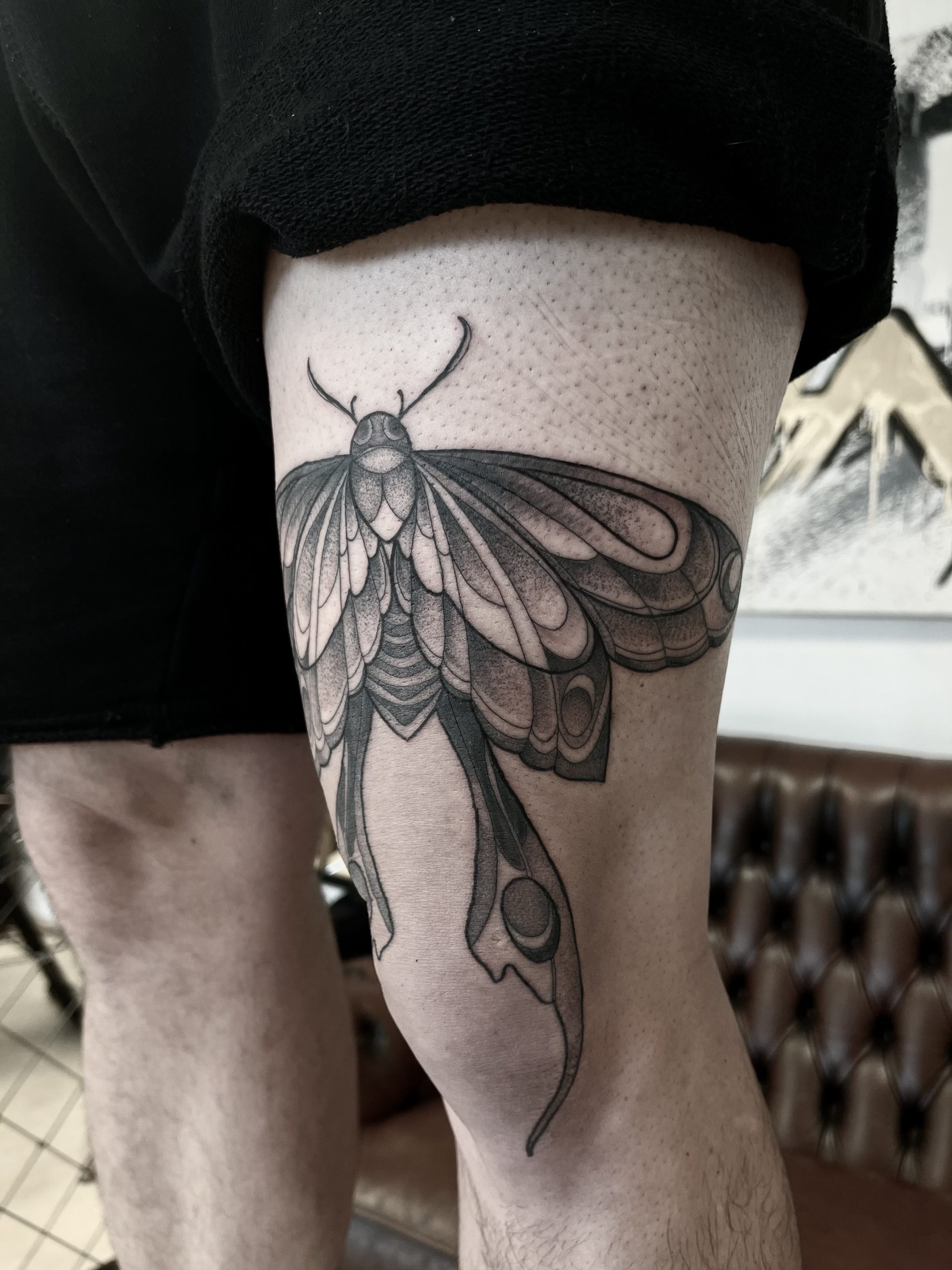
The thigh has a lot of subcutaneous fat, so the tattoo doesn’t hurt as much—at least on the outer side. It’s a different story on the inner thigh; only those who truly enjoy a good dose of pain should get a tattoo there. How quickly your thigh tattoo fades depends on your connective tissue. Frequent weight fluctuations, pregnancies, and weak connective tissue are bad for the tattoo. Intensive care is important, as clothing often rubs against this area. And aside from that, proper care is also good for your connective tissue and keeps your skin elastic.
calf
The calf is a spot that’s particularly well-suited for tattoo beginners. That’s because pain is generally minimal here, aside from a few pressure points. There’s also a very practical consideration: anything below the knee tends to be less affected by tattoo aging. The skin doesn’t lose its elasticity as quickly, and weight fluctuations don’t play a role. Aside from sunscreen, your calf tattoo requires almost no maintenance.
foot
Your feet are extremely sensitive to pain. And foot tattoos are a challenge even for tattoo artists. This is because there are reflex points in this area that cause the foot to twitch uncontrollably during the tattooing process. Tattoo fading is only an issue here in one respect: the colors tend to bleed because your foot is under constant pressure throughout the day. Socks and shoes cause friction, which damages the design. Please always take good care of it!